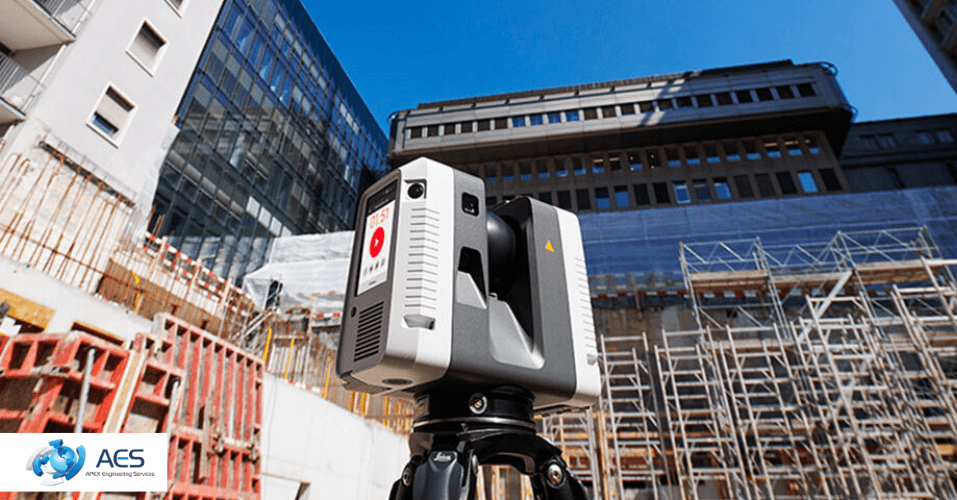
3D laser scanning is somewhat similar to MRI scanners that help doctors identify any unusual activity in internal organs. Just like this, through advanced laser scanning devices, contractors get high-resolution pictures and digital models of the project.
However, 3D models, which are created through CAD software, highlight concealed cracks, alignment of pillars, ductwork, pipework, setting of electric wires, ceiling, floors, and many more. In a direct way, it is a gadget that can inspect what the normal human eye cannot.
If you are simply renovating or want to learn about the progress of the construction, this 3D laser scanning is perfect to integrate into any situation where accuracy is in high demand.
This laser scanning can be evidently done in three projects relevant to:
Buildings
Tunnels
Bridges
So, through this blog, you will recognise the importance of employing a structural survey with 3D scanning.
The Role of Extracted As-Built Documentation From Laser Scanners
An as-built document is just like an updated version of the original construction drawing that pinpoints what changes were previously made on the construction site and what the present results of it are.
What is actually shown through this document is:
- Changes that builders need to make during construction
- At what point do things take a U-turn from what was planned from the beginning
This as-built documentation provides the physically constructed project in an electronic form through a laser scanner that captures a 360-degree Dome of points.
How was This As-Built Document Created In the First Place?
First, an engineer of AES takes their laser scanning device to the site, where, before scanning, they place “Targets”. These targets will simplify the overall work as they merge the multiple scans into a single set of as-built data.
Next, by opening these scans in a CAD software, the experts view the floor by dissecting the cross-section. Through this, they will be able to recognise the distance residing in the floors and clearly learn about the area which is located between the two zones, rooms, or floors known as interstitial spaces.
After deeply understanding this perspective, the professionals create markup on the point cloud (the final collection of all points captured by a scanner) and take measurements. Lastly, the accurate 3D or 2D models will be the end results, which assist builders in witnessing unseen structural problems by matching them with a project blueprint.
For example, in a railway project through as-built documentation, constructors will learn about tight curves, guard rails, and trap points in detail, to prevent any unforeseen accident. This is the ideal way to do the maintenance swiftly, because chances of human error are eliminated from it.
Did You Know?
Through a study, it has been shown that before this structural 3D scanning, four hours per week are spent on rework activities, with no guarantee that this alteration is based on accuracy or not.
The Benefits of 3D Laser Scanning
Get Hands-On Projects Layout
Through 3D laser scanning devices, contractors oversee the detailed version of a constructed tunnel, railway, or building. However, the hidden problems in structures will come to light before the occurrence of any consequences.
Notice: If, as a contractor, you want to comprehend how laser scanning can improve construction project accuracy, then reading a blog on it might be advantageous for you.
Enhance Communication
By gaining access to exact as-built documentation, designers, builders, and engineers can openly communicate about why certain areas undergo changes and what parts need revision because of that.
Approximation of Project Cost
Through a structural survey with 3D scanning, a team of constructors can easily analyse how much material is required to do the upgrades in the project.
Give an Appropriate Task to an Appropriate Team Member
After interpreting obscure, dangerous issues in the project, the 3D models help a team leader to assign the task among the members to do the maintenance properly.
The laser scanning of Apex Engineering Services is an excellent way to learn about floor surface, contours, infrastructure, utilities, and precise measurements of the project.
What are the questions that people have for Apex Engineering Services?
How does 3D laser scanning detect issues that aren’t visible to the human eye?
3D laser scanning captures millions of precise data points to create a high-resolution digital model of a structure. This model reveals concealed cracks, misaligned pillars, hidden ductwork or pipework issues, and irregularities in floors, ceilings, or wiring that inspectors might miss during a normal walkthrough.
Can 3D scanning identify structural problems during both renovation and construction?
Yes. Whether construction is ongoing or a building is being renovated, 3D scanning provides detailed information about the current condition of the structure. It shows how the actual project compares to the original plans, making it easier to detect deviations or potential risks early.
What types of structures benefit most from using 3D scanning for hidden problem detection?
Buildings, tunnels, bridges, and other infrastructure projects benefit greatly. These structures often have complex internal systems and areas that are difficult to access. 3D scanning provides a clear view of these confined or hidden spaces without invasive inspections.
How accurate are the results from a 3D laser scan when detecting structural issues?
3D laser scanners capture 360-degree point clouds with millimetre-level accuracy. When processed in CAD software, this data produces highly reliable 2D or 3D models. This accuracy helps engineers pinpoint problems such as structural shifts, spacing errors, or unsafe curves with confidence.
Does implementation of a structural survey with 3D scanning help reduce mistakes and unnecessary rework?
Absolutely. Previously, teams spent hours per week on rework caused by inaccurate measurements or assumptions. 3D scanning eliminates much of this guesswork by providing exact as-built documentation. This means issues are spotted earlier, decisions are made faster, and costly human errors are significantly reduced.
Conclusion
The way engineering and construction teams comprehend their projects is changing through 3D laser scanning. It eliminates uncertainty, lowers errors, and reveals features that are invisible to the human eye by gathering accurate, real-time data and turning it into understandable as-built documentation.
Apex Engineering Services provides the precision and interpretation required to keep projects safe, effective, and on schedule, whether they are for buildings, tunnels, or bridges. So, reach out to their team and do an accurate structural survey with 3D scanning.